I recently went to Ealing Beer Festival, an event I look forward to every year.
Like most people, we spent the afternoon working our way around the festival, tasting beers from breweries we'd never heard of before. We tried pale ales, lagers, stouts, IPAs and sours. Some were interesting, some were surprisingly good, and some… weren't really for us.
Then one of my friends said something that made me stop and think.
"I thought we'd find really good beers here."
It was a fair comment. If we were judging purely on taste, none of the beers we tried was better than the big brands we already knew from pubs or supermarkets.
But I realised we had arrived with different expectations. My friends were looking for a new favourite beer. I was looking to discover breweries I'd probably never have come across otherwise.
"We're here to find something unique, not something great," I laughed.
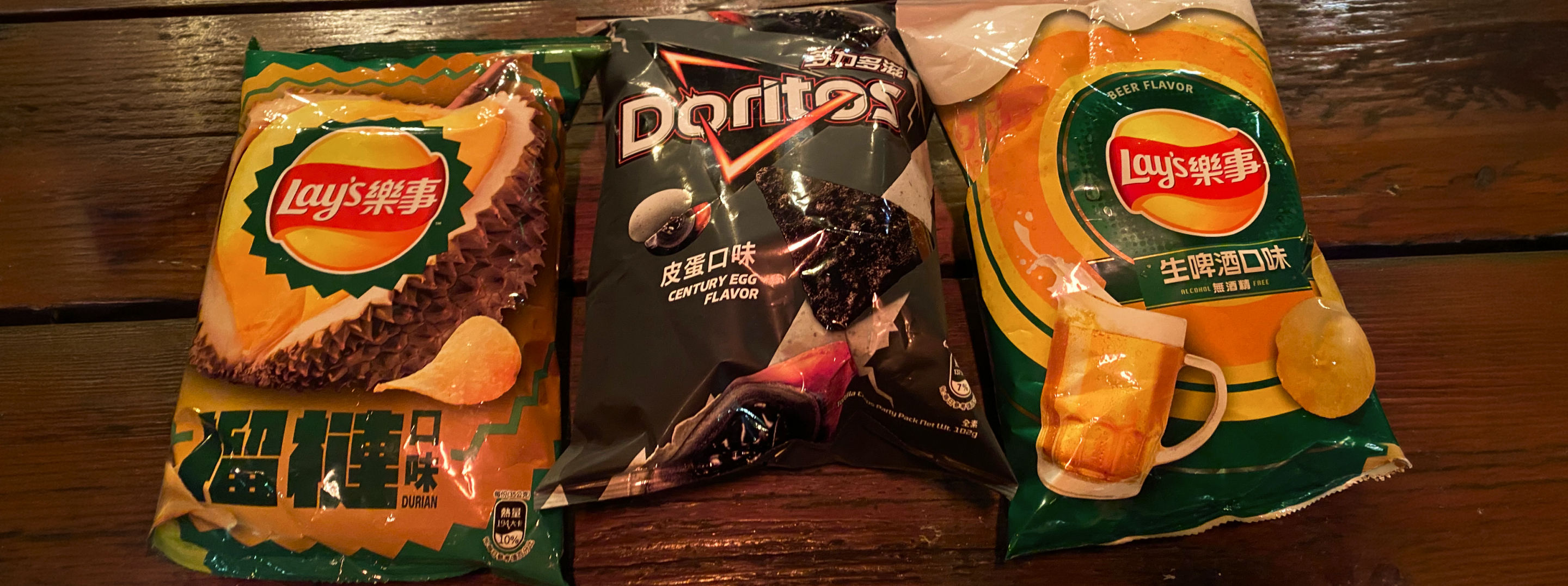
That conversation reminded me of something else I did earlier this year. While I was in Taiwan, I bought several limited-edition crisp flavours to bring back to London: durian, beer and coriander from Lay's (Walkers), and century egg from Doritos.
Did I expect them to taste amazing?
Honestly, no.
I bought them because they sounded so strange that I wanted to see everyone's reaction.
The durian flavour was exactly as dramatic as I'd imagined. One friend immediately pulled a face and said, "Eww." I couldn't stop laughing, but I wasn't much better. I had never even tried real durian before, and after one crisp I wasn't convinced I ever wanted to.
By the end of the evening, every packet had been opened, everyone had tried one, and most of the crisps ended up in the bin.
None of them became our new favourite snack.
But they gave us a brilliant evening, and a story we've told more than once since.
Curiosity creates attention
The more I thought about these two experiences, the more I realised they reflected the same marketing principle.
Not every product is launched to become an instant bestseller. Sometimes its first job is simply to make people curious.
That's why so many brands experiment with unexpected flavours, limited editions and unusual collaborations. They're not only creating something new to buy; they're creating something people want to experience, discuss and share.
The coriander-flavoured crisps are a great example. In Taiwan, people didn't just review them. They started crushing them over noodles and rice as a substitute for fresh coriander, sharing recipes and reactions across social media. The conversation quickly became much bigger than the product itself.
Attention is still something brands need to earn
We often judge products by a simple question:
“Would I buy it again?”
But perhaps that is not always the first question to ask.
The durian crisps probably won’t become my regular snack. The unusual beers I tried at the festival probably won’t replace the drinks I already enjoy. But they achieved something important: they made me stop and pay attention.
For smaller breweries, that might mean introducing people to a brand they have never encountered before. For established brands like Lay’s, it might mean reminding customers that there is still something new to discover.
Because even the strongest brands cannot rely on familiarity forever.
In a crowded market, attention is not something brands earn once and keep forever. It needs to be continuously created.
Maybe that's why brands keep creating products that aren't designed to become everyone's favourite. They're designed to spark curiosity.
Because curiosity is often the first step towards attention, and attention is where every successful launch starts.