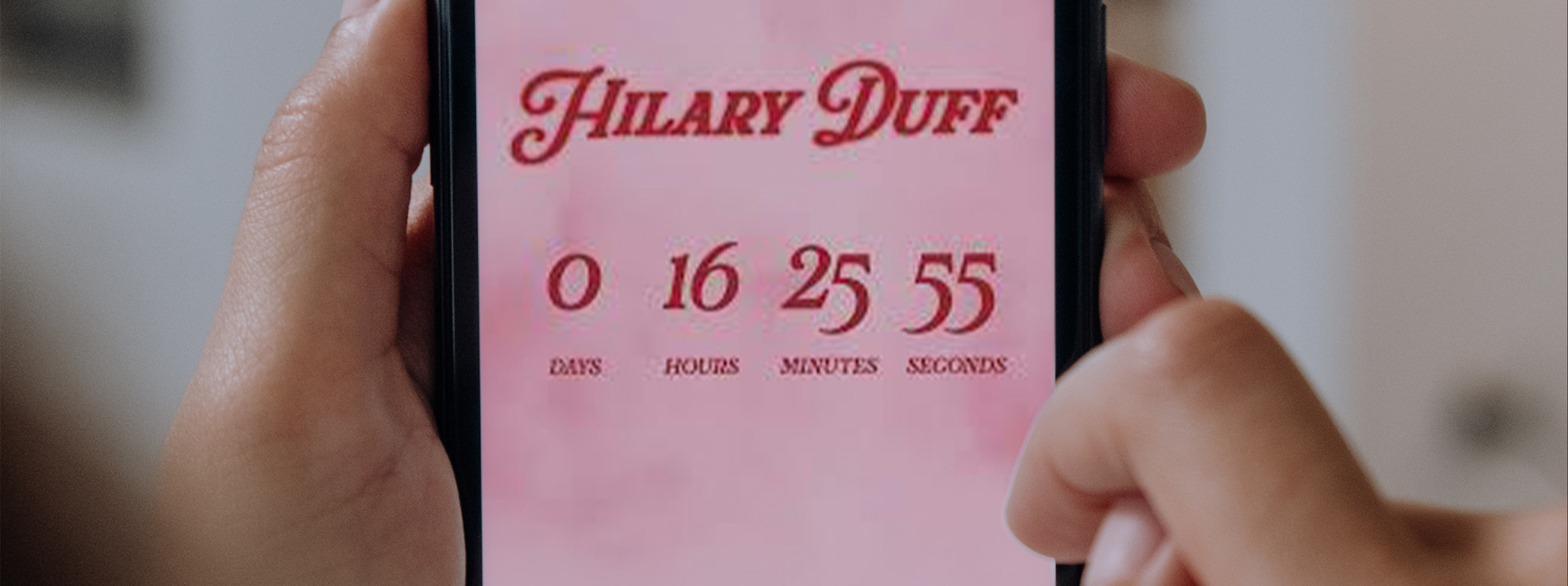
Outside O2 Shepherd’s Bush Empire, tickets for Hilary Duff’s comeback show were selling for over £1,000, a sign that her return wasn’t just another album launch, but more a cultural moment. Her first major UK performance in well over a decade landed 4 stars from The Guardian; fans were so loud they nearly drowned her out. After years away from the spotlight, her return didn’t feel tentative; it was bold, deliberate, and perfectly timed to capture both nostalgia and fresh attention. What makes this comeback interesting is that Duff wasn’t coming back as a chart-topping star – she was never really in that league – yet her pop comeback has landed perfectly, timed and crafted in a way that feels relevant while harnessing the homegrown charm of her Lizzie McGuire days.
Current wisdom (and algorithms) insist that brands are ‘always on’, and that a constant stream of content needs to be maintained if you’re going to get noticed. Duff’s hiatus disrupted this, creating space for anticipation. Instead of rebranding herself or chasing viral trends, her comeback unfolded deliberately, giving each announcement and appearance more impact. In August last year, she set the tone for her return with a carousel of nostalgic photos on Instagram. Rather than leaning into reinvention, the post focused solely on her early career, acknowledging fans who had been there from the start, before ending with ‘to be continued...’ a deliberate first move in a campaign built on nostalgia as strategy.
Momentum wasn’t about Duff or her team trying to manufacture virality. Instead, her press tour was carefully planned around shows with strong millennial followings (and a strong track record of high performing content), from The Drew Barrymore Show, The Tonight Show Starring Jimmy Fallon, and Jay Shetty’s podcast to editorials in Glamour, Interview Magazine, and Vanity Fair’s Scene Selections series. Each appearance reached fans who grew up with her, repurposing the past in a way that feels culturally relevant.
On Luck… Or Something, Duff thankfully hasn’t jumped on the ‘365-party girl’ moment; instead, she leans strategically into her early audience with relatability and a touch of millennial cringe. In terms of content, is it better to churn out endless wallpaper to satisfy the algorithm or to wait until you have something really special to say? Her comeback shows the impact of thoughtful strategy: timing, cultural context, and authenticity have made the return feel both familiar and relevant. In a world where it’s easy to fill feeds with endless content, Duff proves the value of waiting until you have something worth saying.